Grim report card for planet ranks 2017 one of hottest years in recorded history


Story highlights
- 2017 was hottest year without an El Nino
- Sea levels reached all-time high
(CNN)Last year was one of the hottest in recorded history, according to a new study released Wednesday by the American Meteorological Society.
The report is another piece of compelling evidence that our planet is warming faster than at any point in modern history. It's the 28th version of the annual checkup for the planet and updates numerous global climate indicators such as polar ice, oceans and extreme weather events around the world.
The State of the Climate in 2017 report, led by National Oceanic and Atmospheric Administration's Centers for Environmental Information, was compiled using contributions from more than 500 scientists in more than 60 countries.
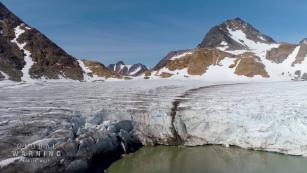
The fact that 2017 was either the second- or third-hottest year, depending on the dataset used, does not come as a surprise. It follows a string of record hot years in 2014, 2015 and 2016 -- and while 2017 did not provide a fourth consecutive record, it was the hottest non-El Niño year seen.
El Niño, which is characterized by a warming of the equatorial Pacific Ocean, tends to warm up the entire planet during years when it occurs.
Conversely, when La Niña is active, it tends to provide some natural air-conditioning for the planet as large portions of the Pacific Ocean cool to below average temperatures. Even though 2017 had a weak La Niña present in the beginning and end of the year, it failed to regulate the planet's high temperature caused by ever-increasing amounts of greenhouse gas concentrations.

Photos: 2017's billion-dollar disasters in photos
South/southeast severe weather – Severe storms stretching from the southern plains to Kentucky caused $2.6-$2.7 billion in damage. Large hail and high winds in Texas, just north of the Dallas metro, caused widespread damage.
Hide Caption
8 of 15

Photos: 2017's billion-dollar disasters in photos
Midwest tornado outbreak – An extensive tornado outbreak and powerful straight-line winds affected many from Kansas to New York in March of 2017. Nearly one million people lost power in Michigan. Overall there were between $2.1 and $2.2 billion in damage estimated across these states.
Hide Caption
9 of 15

Photos: 2017's billion-dollar disasters in photos
Central/southeast tornado outbreak – In March, the second largest tornado outbreak of 2017 spawned 70 tornadoes from the Central US to the Southeast. Six people lost their lives and damages estimated to be nearly $1.8 billion.
Hide Caption
10 of 15

Photos: 2017's billion-dollar disasters in photos
Missouri and Arkansas flooding and central severe weather – More than 15 inches of rain fell over a multi-state region leading to historical levels for multiple rivers in Missouri and Arkansas. Homes, businesses, infrastructure and agriculture were all affected leading up to $1.7 billion in damage and 20 lives lost.
Hide Caption
11 of 15

Photos: 2017's billion-dollar disasters in photos
California flooding – After years of being in severe drought, California saw an intense amount of rainfall that contributed to flooding, landslides, and erosion equaling $1.5 billion in damages. Most notable was the damages to the Oroville Dam spillway which lead to a multi-day evacuation of 188,000 residents.
Hide Caption
12 of 15

Photos: 2017's billion-dollar disasters in photos
Midwest severe weather – Two separate Midwest storms each contributed over a billion dollars in damages in June. One caused $1.4 billion of damage due to straight-line winds, hail and more than a dozen tornadoes in Iowa and Nebraska. Another series of storms from Wyoming to New York contributed at least $1.5 billion of damage due to similar conditions, severe winds, tornadoes and destructive hail.
Hide Caption
13 of 15

Photos: 2017's billion-dollar disasters in photos
Southern tornado outbreak and western storms – A violent storm system moved across the US in January. After damaging winds in southern California, the storm produced the third most tornadoes ever in a winter month. From Texas to Georgia, 79 confirmed tornadoes killed 24 and generated $1.1 billion in damages.
Hide Caption
14 of 15

Photos: 2017's billion-dollar disasters in photos
Southeast freeze – It is not unheard of to have a freeze during March in the south, but what made this freeze different were the three weeks of unseasonably warm weather before it. Because of this warm weather, the southern crops had already bloomed and when the temperature got below freezing, it killed many of the peach, blueberry, strawberry and apple crops.
Hide Caption
15 of 15

Photos: 2017's billion-dollar disasters in photos
Hurricane Harvey – The hurricane hit Texas around 11 p.m. ET on Friday, August 25, between Port Aransas and Port O'Connor. The Category 4 storm became a Category 1 by late Saturday morning, packing winds of 75 mph before Harvey stalled dropping trillions of gallons of rain over Texas. Harvey busted the US record for rainfall from a single storm, dumping 51 inches of rain in parts of Texas flooding much of the Houston Metro for days.
Hide Caption
1 of 15

Photos: 2017's billion-dollar disasters in photos
Hurricane Irma – It is the strongest Atlantic basin hurricane ever recorded outside the Gulf of Mexico and the Caribbean Sea. Irma lasted as a hurricane from August 31 until September 11. The storm, which stretched 650 miles from east to west, affected at least nine US states, turning streets into rivers, ripping down power lines, uprooting trees and cutting off coastal communities.
Hide Caption
2 of 15

Photos: 2017's billion-dollar disasters in photos
Hurricane Maria – The hurricane made its first landfall on the Caribbean island nation of Dominica on Monday, September 18, as a Category 5 storm with winds topping 160 mph - the strongest hurricane on record to make landfall there. Days later, the storm devastated the US territory of Puerto Rico, leaving nearly the entire population in the dark.
Hide Caption
3 of 15

Photos: 2017's billion-dollar disasters in photos
Western wildfires, California firestorm – An unprecedented wildfire season out west led to 18 billion dollars in damages and 54 deaths. More than 1 million acres burned across Montana. In October, the Tubbs, Atlas, Nuns and Redwood Valley wildfires burned over 15,000 structures and became the costliest wildfire event on record. At the end of the year, another series of deadly wildfires burned hundreds of structures in the Los Angeles area.
Hide Caption
4 of 15

Photos: 2017's billion-dollar disasters in photos
North Dakota, South Dakota and Montana drought – The northern plains were hit especially hard by a drought that lasted from the spring to autumn. An estimated $2.5 billion in damages occurred as field crops withered in the sun. The lack of feed, due to damaged wheat, forced ranchers to sell off their cattle.
Hide Caption
5 of 15

Photos: 2017's billion-dollar disasters in photos
Minnesota hail storm and Upper Midwest severe weather – Destructive hail fell across the Minneapolis metro as an extensive storm system moved through Minnesota and Wisconsin. High winds also contributed to the damage that totaled $2.4 billion across the region.
Hide Caption
6 of 15

Photos: 2017's billion-dollar disasters in photos
Colorado hail storm and central severe weather – In May, hail and extreme winds impacted several states from the Rocky Mountains to the Ozark Mountains and the plains in-between. Denver was especially hit with the most expensive hailstorm in Colorado History with insured losses exceeding $2.2. billion. The total estimated cost was at least $3.4 billion.
Hide Caption
7 of 15
Photos: 2017's billion-dollar disasters in photos
South/southeast severe weather – Severe storms stretching from the southern plains to Kentucky caused $2.6-$2.7 billion in damage. Large hail and high winds in Texas, just north of the Dallas metro, caused widespread damage.
Hide Caption
8 of 15
Photos: 2017's billion-dollar disasters in photos
Midwest tornado outbreak – An extensive tornado outbreak and powerful straight-line winds affected many from Kansas to New York in March of 2017. Nearly one million people lost power in Michigan. Overall there were between $2.1 and $2.2 billion in damage estimated across these states.
Hide Caption
9 of 15
Photos: 2017's billion-dollar disasters in photos
Central/southeast tornado outbreak – In March, the second largest tornado outbreak of 2017 spawned 70 tornadoes from the Central US to the Southeast. Six people lost their lives and damages estimated to be nearly $1.8 billion.
Hide Caption
10 of 15
Photos: 2017's billion-dollar disasters in photos
Missouri and Arkansas flooding and central severe weather – More than 15 inches of rain fell over a multi-state region leading to historical levels for multiple rivers in Missouri and Arkansas. Homes, businesses, infrastructure and agriculture were all affected leading up to $1.7 billion in damage and 20 lives lost.
Hide Caption
11 of 15
Photos: 2017's billion-dollar disasters in photos
California flooding – After years of being in severe drought, California saw an intense amount of rainfall that contributed to flooding, landslides, and erosion equaling $1.5 billion in damages. Most notable was the damages to the Oroville Dam spillway which lead to a multi-day evacuation of 188,000 residents.
Hide Caption
12 of 15
Photos: 2017's billion-dollar disasters in photos
Midwest severe weather – Two separate Midwest storms each contributed over a billion dollars in damages in June. One caused $1.4 billion of damage due to straight-line winds, hail and more than a dozen tornadoes in Iowa and Nebraska. Another series of storms from Wyoming to New York contributed at least $1.5 billion of damage due to similar conditions, severe winds, tornadoes and destructive hail.
Hide Caption
13 of 15
Photos: 2017's billion-dollar disasters in photos
Southern tornado outbreak and western storms – A violent storm system moved across the US in January. After damaging winds in southern California, the storm produced the third most tornadoes ever in a winter month. From Texas to Georgia, 79 confirmed tornadoes killed 24 and generated $1.1 billion in damages.
Hide Caption
14 of 15
Photos: 2017's billion-dollar disasters in photos
Southeast freeze – It is not unheard of to have a freeze during March in the south, but what made this freeze different were the three weeks of unseasonably warm weather before it. Because of this warm weather, the southern crops had already bloomed and when the temperature got below freezing, it killed many of the peach, blueberry, strawberry and apple crops.
Hide Caption
15 of 15
Photos: 2017's billion-dollar disasters in photos
Hurricane Harvey – The hurricane hit Texas around 11 p.m. ET on Friday, August 25, between Port Aransas and Port O'Connor. The Category 4 storm became a Category 1 by late Saturday morning, packing winds of 75 mph before Harvey stalled dropping trillions of gallons of rain over Texas. Harvey busted the US record for rainfall from a single storm, dumping 51 inches of rain in parts of Texas flooding much of the Houston Metro for days.
Hide Caption
1 of 15
Photos: 2017's billion-dollar disasters in photos
Hurricane Irma – It is the strongest Atlantic basin hurricane ever recorded outside the Gulf of Mexico and the Caribbean Sea. Irma lasted as a hurricane from August 31 until September 11. The storm, which stretched 650 miles from east to west, affected at least nine US states, turning streets into rivers, ripping down power lines, uprooting trees and cutting off coastal communities.
Hide Caption
2 of 15
Photos: 2017's billion-dollar disasters in photos
Hurricane Maria – The hurricane made its first landfall on the Caribbean island nation of Dominica on Monday, September 18, as a Category 5 storm with winds topping 160 mph - the strongest hurricane on record to make landfall there. Days later, the storm devastated the US territory of Puerto Rico, leaving nearly the entire population in the dark.
Hide Caption
3 of 15
Photos: 2017's billion-dollar disasters in photos
Western wildfires, California firestorm – An unprecedented wildfire season out west led to 18 billion dollars in damages and 54 deaths. More than 1 million acres burned across Montana. In October, the Tubbs, Atlas, Nuns and Redwood Valley wildfires burned over 15,000 structures and became the costliest wildfire event on record. At the end of the year, another series of deadly wildfires burned hundreds of structures in the Los Angeles area.
Hide Caption
4 of 15
Photos: 2017's billion-dollar disasters in photos
North Dakota, South Dakota and Montana drought – The northern plains were hit especially hard by a drought that lasted from the spring to autumn. An estimated $2.5 billion in damages occurred as field crops withered in the sun. The lack of feed, due to damaged wheat, forced ranchers to sell off their cattle.
Hide Caption
5 of 15
Photos: 2017's billion-dollar disasters in photos
Minnesota hail storm and Upper Midwest severe weather – Destructive hail fell across the Minneapolis metro as an extensive storm system moved through Minnesota and Wisconsin. High winds also contributed to the damage that totaled $2.4 billion across the region.
Hide Caption
6 of 15
Photos: 2017's billion-dollar disasters in photos
Colorado hail storm and central severe weather – In May, hail and extreme winds impacted several states from the Rocky Mountains to the Ozark Mountains and the plains in-between. Denver was especially hit with the most expensive hailstorm in Colorado History with insured losses exceeding $2.2. billion. The total estimated cost was at least $3.4 billion.
Hide Caption
7 of 15
Photos: 2017's billion-dollar disasters in photos
South/southeast severe weather – Severe storms stretching from the southern plains to Kentucky caused $2.6-$2.7 billion in damage. Large hail and high winds in Texas, just north of the Dallas metro, caused widespread damage.
Hide Caption
8 of 15


The major greenhouse gasses, carbon dioxide (CO2), methane and nitrous oxide, all rose to record high amounts in our atmosphere during 2017, according to the report.

The global average carbon dioxide concentration was 405.0 parts per million (ppm), which is the highest ever recorded and also higher than at any point in the last 800,000 years, according to ice-core data.
Oceans heating, rising
The oceans are also heating up, with significant planet-altering consequences.
The global average sea surface temperatures were near a record high, just slightly below the record from 2016, and the last three years have seen the hottest on record.

Warm seas equal rising seas, and 2017 set a new record for global sea level -- which has risen year over year for six consecutive years and 22 of the last 24 years. Global sea level is rising at an average rate of 1.2 inches (3.1 cm) per decade, and that rate has been even higher in the most recent decades as sea-level rise accelerates.
Unprecedented coral bleaching also occurred during 2017, according to the report, which was the most widespread and destructive ever observed with hundreds of miles of corals in the Atlantic, Indian and Pacific Ocean basins experiencing up to 95% mortality in the hardest-hit reefs.
Both poles see record low ice
Both the Arctic and the Antarctic saw record low levels of sea ice during 2017, as warmer air and sea surface temperatures continued the trend of thinning out the polar ice.
"Today's abnormally warm Arctic air and sea surface surface temperatures have not been observed in the last 2,000 years," the study said.
In March of 2017, at the end of the ice-growing season when the coverage of sea ice in the Arctic reached its maximum extent of the year, scientists found it was the smallest yearly maximum in the 37-year record.

The 2017 average annual #SeaIce extent in the #Arctic was 2nd smallest on record: @NOAANCEIclimate http://bit.ly/2017GlobalClimateReport … #StateOfClimate

In the Antarctic, sea ice was below average for all of 2017, hitting record lows during the first four months of 2017. On March 1 it hit a record low extent since satellites began observing the ice in 1978.
As for land ice, the news continues to be grim, which is bad news for global sea levels as melting glaciers are a significant contributor to rising ocean levels.
Glaciers across the globe lost ice mass for the 38th consecutive year -- with declines "remarkably consistent" across all regions of the planet according to the report. To put the amount of ice lost since 1980 into perspective, the report states that "the loss is equivalent to slicing 22 meters (more than 70 feet) off the top of the average glacier."
Extreme storms and rainfall
"Climate is not experienced in annual averages," the report states, even though that is how we most often monitor and gauge the changes in our planet's climate variability -- both natural and human-influenced.
"Humans experience climate change and variability most deeply in the form of impacts and extremes," according to the report --- and 2017 certainly had plenty of them.
Even though globally tropical cyclone (hurricanes, typhoons, tropical storms, etc.) numbers were about average in 2017, the North Atlantic basin had one of it's busiest years on record with three standout hurricanes.
Hurricane Harvey dumped record rainfall totals in Texas and Louisiana, including a new US record of 60.5 inches (1,538 mm) which smashed the old record of 52 inches (1,320 mm).
Right on it's heels came Hurricane Irma, which became the strongest tropical cyclone globally of the year and the strongest Atlantic hurricane outside of the warmest waters of the Gulf of Mexico and Caribbean.
Hurricane Maria immediately followed, bringing catastrophic damage across the Caribbean Islands including devastating the landscape and infrastructure of Puerto Rico.
All three of these hurricanes ranked in the top-5 costliest disasters in US history.

Notable, deadly floods hit every continent except Antarctica -- with India floods claiming 800 lives, Venezuela experienced its most devastating flooding in more than a decade, and flooding of the Niger and Benue Rivers in Nigeria displaced more than 100,000 people.
Global fire activity was the lowest since at least 2003, but extreme droughts in a few key locations led to a number of devastating fire seasons globally.
In the US, an extreme western wildfire season saw over 4 million hectares burned, costing $18 billion -- which tripled the previous US annual wildfire cost record from 1991. Just to the north, Canada's British Columbia saw 1.2 million hectares burn during their driest summer on record.
Spain and Portugal had their second- and third-driest years respectively -- and suffered through an unusually long fire season that claimed over 100 lives.

